
Zakat 2026
A Form of Alms-Giving Treated in Islam - Obligation to Pay Zakat
PAY YOUR ZAKAT
A Form of Alms-Giving - Obligation to Pay Zakat
Calculating Zakat. This is the obligatory giving of a certain percentage in proportion to one's wealth to the recipients of zakat. Zakat is the third pillar of Islam which is considered as a kind of devotion offering for self-cleansing or purification. Wealth can cause many evils to happen but, if one pays Zakaah regularly, he remains safe from its evil influence.
Zakat is due as regular giving of 2.5% of someone's wealth, donated yearly to support the needy and not as voluntary gifts that are offered out of compassion. Gold, silver, cash, and other items specified below are subject to the amount of Zakat. By paying the Zakat that is due, for the purposes which we believe God has decreed, we are fulfilling our obligation as Muslims.
HNCO have a 100% Zakat Policy
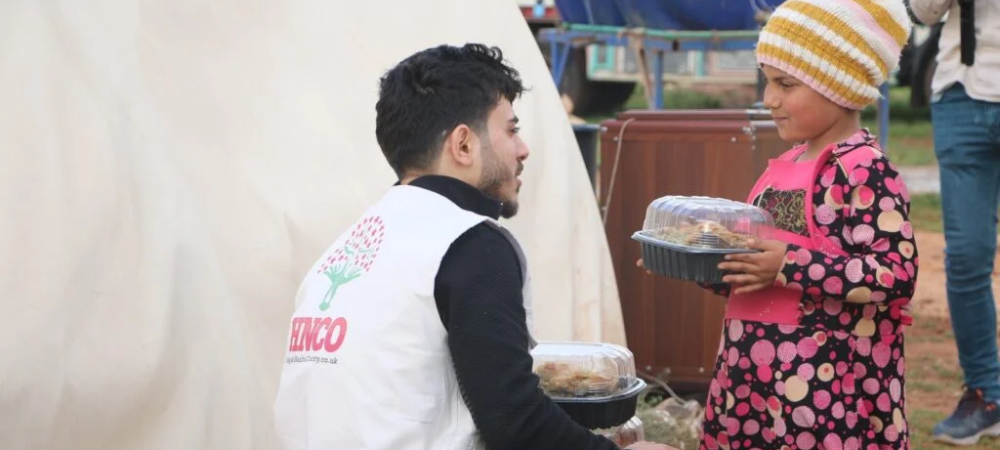
During Ramadan, Muslims give their obligatory Zakat as an act of compassion and unity within the Ummah. Through HNCO, your Zakat supports global emergencies and vital causes such as orphans, clean water, education and healthcare — with 100% of your Zakat passed on to eligible recipients.
Zakat is an act of obedience to God and reminds believers that all wealth belongs to Him. It teaches self-discipline, reduces selfishness, and frees the heart from attachment to money and possessions. Through giving, Muslims develop honesty, humility and selflessness, living the life Islam encourages.
Zakat is calculated differently depending on the type of wealth. Money, gold and silver are given at 2.5%, while other assets such as trade goods, farming produce, livestock and mining products have different rates.
The Five Pillars of Sunni Islam
Zakat Calculator
Enter your assets and liabilities to calculate your Zakat obligation.
Your Assets
Total Assets: £0.00
Your Liabilities
Total Liabilities: £0.00
Net Zakatable Wealth
£0.00
Nisab Threshold: £8,436.571
Your wealth is below the Nisab threshold - Zakat is not obligatory.
Nisab rates updated: 2 June 2026. Gold and silver spot prices are reviewed periodically against published UK guidance (e.g. National Zakat Foundation).
100%
of your Zakat reaches recipients
10,000+
donors supported HNCO appeals
15+
countries reached including Pakistan, Bangladesh, Yemen & Gaza
ZAKAT
Islam educates us the lesson of helping the needy and the poor in the time of need when they're destitute of things, which are otherwise the necessities of life. According to the Holy Quran, Allah has mentioned at various places the importance of Zakat. Zakat has also been utilized as a crucial task that every Muslim must do every now and then.

Why is Zakat Important?
Zakat is the giving of a specific amount of one's wealth to charity. Muslims pay this as a deed of worship, and though it's oftentimes compared to a tax, Zakat is not the same as taxes imposed by governments. Keep in mind that Zakat is a spiritual duty, solely for the sake of Allah. Zakat is the third pillar amongst the Five Pillars of Islam and significantly vital to Muslims around the globe. This is mentioned together with Salat in 82 verses of the divine Qur'an.
What Does Zakat Mean?
The term Zakat means 'purification' or 'to cleanse' and by fulfilling this religious responsibility, Muslims guarantee that their wealth has been cleansed for the willpower of Allah.
Are There Any Benefits of Zakat?
Zakat has countless worldly and spiritual benefits. Muslims consider that through paying Zakat, they're doing the will of Allah and will acknowledge that all of their prosperity comes from Allah as a loan and they don't possess anything themselves. Through Zakat, Muslims understand how to behave with honesty and to put less emphasis on material possessions. Furthermore, Zakat is all about doing self-discipline and releasing oneself from greediness, the love of oneself and the love of money.
Who is Eligible for Zakat?
Muslims should pay Zakat in order to fulfill the commandment of the Almighty Allah and to take care of the poor and needy individuals around the globe. Zakat is present in Islam from the very start of the creation of faith, and the obligatory status of Zakat is according to the book of Allah, which is the Qur'an - the wisdom of the Prophet Muhammad, as well as the unanimity of his companions.
Who Needs to Pay Zakat?
All Muslims who have reached their puberty, are of sound mind and have acquired the minimum required amount of Nisab (wealth) are obliged to perform Zakat. The standard amount donated to Zakat is 2.5% of an individual's total cumulative wealth in a single lunar year. The amount of the Nisab in tradition is 612.36 grams of silver or 87.48 grams of gold. Scholars suggest that Muslims apply the value of Nisab of silver rather than gold to guarantee that more persons are qualified for Zakat.
When Should I Pay Zakat?
The period that your wealth matches the Nisab must ideally be indicated as the start of your initial Zakat year. When a single lunar year has passed, you must pay Zakat. It is a great ideal to keep paying for the similar time every year to guarantee that you sufficiently fulfill this spiritual responsibility. The majority of people prefer to offer their Zakat in the period of Ramadan, as it's the period of huge blessings and the rewards for good acts are considered to be even greater in this blessed period.
Who Should Accept Zakat?
The classes of the individuals who can accept Zakat are mentioned in the Qur'an. Allah mentions that Zakat is only for the destitute and poor. Thus, anyone who is destitute or poor is qualified to accept Zakat, which includes those people who are in debt and not able to pay it back.
Who Are the Beneficiaries of Zakat?
From the ayah of Quran, below are the people who can receive Zakat:
- 1.The Poor - The poor are the individuals who don't have any means to live their own life properly.
- 2.The Needy - The needy are the individuals who are also poor, but due to their introversion, they do not show their poverty.
- 3.The Collectors - The ones given the responsibility of collection of Zakat from other individuals.
- 4.The New Converts - People who convert to Islam, as they need help and assistance to begin a new life.
- 5.The Free Slaves - Zakat can be spent on freeing the slaves as well.
- 6.To Aid Debt - Those people who are in debt and cannot pay it off on their own.
- 7.For Travellers - Zakat can be given to wayfarers and travellers who may require money for travel arrangements.
- 8.In the Cause of Allah - Zakat can be given to individuals who aim in the way of Allah.
Zakat Can't Be Used for: Clearing the debt of the deceased, burying the deceased, or constructing mosques.
Zakat and Sadaqah Are Different Forms of Giving
Read HNCO's guide to the difference between Zakat and Sadaqah for a point-by-point comparison of their amounts, timing, recipients, and uses.
How HNCO Uses Zakat
- Establishing Society: Zakat helps those people in the society who are less fortunate. If one group of society keeps on collecting all the money and doesn't give anything to anyone else, then the others would stay in the same dilemma. Thus, whenever the wealthy offer Zakat, the less fortunate get an opportunity to enjoy a better life.
- Sense of Sacrifice: Zakat teaches the message of sacrifice. Wealth is one of the key elements that people love the most. When a person offers their wealth, it means they value the order of Allah over their personal likings and are eager to sacrifice what they truly love for Allah.
- Circulation of Money: Zakat brings about the circulation of money. Any voluntary giving denotes that money gets out of the hands of the extremely rich and circulates in the wider economy.
What Items Fall Under the Range of Zakat?
What is the Meaning of Nisab and Hawl?
Nisab is the minimum amount of wealth a Muslim should have before they become eligible to pay Zakat. Silver and gold are the two main values utilized to measure the Nisab threshold. Nisab is the value of 612.36 grams of silver or 87.48 grams of gold. Most Islamic advice to donors is to use Silver (which is always a lower Nisab threshold than gold) as it enables a bigger percentage of your wealth to qualify for Zakat, which in turn means more help for the recipients.
Hawl defines a lunar calendar year, often simply called the Islamic Calendar Year. The concrete payment of Zakat is to be made one Hawl (lunar year) after you've become qualified to pay Zakat, in case your wealth during that period is over - or at - the Nisab threshold.
When is My Zakat Due? Your Hawl Anniversary
Zakat is not tied to 1st Ramadan or to the calendar year — it is owed on your personal Hawl anniversary, the Hijri date one lunar year after your wealth first reached and stayed above the Nisab. Use this three-step decision:
- Find your start date. Identify the Hijri date your net Zakatable wealth first crossed the Nisab (Silver £987 in 2026).
- Wait one lunar year. If, on that same Hijri date next year, your wealth is still at or above the Nisab, Zakat is due — even if it dipped below in between.
- Lock the date. That Hijri date becomes your annual Zakat anniversary forever. Many UK Muslims also pay during Ramadan for added reward, which is permitted as long as it is on or before the Hawl date.
If you genuinely cannot remember when your wealth first crossed the Nisab, pick a fixed Hijri date (e.g. 1st Ramadan) and treat it as your Hawl from now on.
Zakat al-Mal vs Zakat al-Fitr — the Two "Zakats"
Zakat al-Mal (this page)
- 2.5% of qualifying wealth
- Paid annually on your Hawl anniversary
- Only if wealth is above the Nisab
- Distributed to the 8 Qur'anic categories
Zakat al-Fitr (Fitrana)
- Fixed per-person amount (HNCO: £5 in 2026)
- Paid once a year, before the Eid al-Fitr prayer
- Owed by every Muslim with food beyond their daily need
- See: Zakat al-Fitr (Fitrana)
Zakat on Crypto and Digital Assets (2026)
The mainstream contemporary UK scholarly position — held by the National Zakat Foundation (NZF), AMJA and most UK Islamic finance scholars — is that cryptocurrencies are Zakatable wealth. This includes:
- Bitcoin, Ethereum and other coins held as investment or in a wallet
- Stablecoins (USDT, USDC) treated like cash
- Coins held on UK exchanges (Coinbase, Kraken, Binance UK)
- Day-trading positions — valued like trading stock
Convert your total holdings to GBP at the spot price on your Hawl anniversary and pay 2.5%. NFTs held purely as collectibles for personal enjoyment are not Zakatable, but NFTs held for resale are treated as trading stock.
UK Zakat Guidance & Authority
For complex personal Zakat calculations (pensions, share schemes, business equity, mixed-currency wealth), UK Muslims can also consult the National Zakat Foundation (NZF), the UK's specialist Zakat body. HNCO follows the same eight-category Qur'anic framework and applies a 100% donation policy on Zakat, channelling your funds to verified recipients in Pakistan, Bangladesh, Yemen, Gaza and beyond.
What Do You Count on Your Net Assets for Zakat?
Your net assets can be totalled as the liquid assets you own minus the short-term liabilities. Liquid assets are those which can be transformed into cash easily, whereas short-term liabilities include credit card debts, personal loans, rent, and bills. Following should be included in your wealth:
- Cash at home and in the bank
- Cash saved for any special purposes (car purchase, Hajj, wedding etc.)
- The amount of silver and gold you have
- The number of shares at their market price
- Money owed to you that is likely to be repaid
- If you have a business, the balance sheet value of stock you own
- If you have properties, any saved rental income
You don't have to calculate the value of your home, land, personal items like home appliances, clothing, or vehicle as part of your wealth.
ASSETS – SHORT TERM LIABILITY = YOUR NET ASSET
As long as your net asset is more than the Nisab of the day, you are qualified to pay Zakat.
Zakat on Gold and Silver
Gold and silver should contribute to Zakat. For silver, it includes items or jewelry, measured according to the current price per gram. If all your asset is in gold, the amount you possess should be above the Gold Nisab to qualify. If your asset is a blend of silver, gold or cash, it's suggested to use the Silver Nisab threshold. Many scholars hold the perspective that it will be extremely advantageous to include all silver and gold you possess as part of your assets, regardless of whether they're for personal use.
Zakat on Property Trading and Shares
If you own shares for trading purposes, include them in your net assets. If shares aren't for trading but serve as an investment to offer dividends, it's only the dividends that must be included. The same principles apply to property trading - if a property is bought with intention to resell, its value should be counted. If purchased as an investment, only the profit is eligible.
Zakat on Mortgages and Loans
If you have a long-term mortgage loan, it can't be totalled as a liability in your calculation. Loans taken out for personal use can be deducted as a liability in the Zakat computation.
Zakat on Property and Business Goods
Business stocks should be totalled as wealth for Zakat purposes at their balance sheet value (normally the cost of buying the stock). Business premises don't need to be counted, nor do any properties the business owns such as retail units or land.
What is Zakat-ul-Fitr?
Prior to the end of the Ramadan month, each grown Muslim who has excess food should pay what is called Zakat-ul-Fitr. The person should pay for himself and his dependents. This should be paid prior to the Eid prayer and in the form of the staple food of the community.
Can Zakat Be Paid in Advance or in Installments?
Yes, Zakat can be paid prior to its due date. Someone who is legally accountable to pay Zakat can pay via monthly installments within the year, with the intention of paying the Zakat. If the Hawl comes to an end, the Zakat must be computed, and whatever remains outstanding must be paid off. In a similar way, the remaining amount can also be paid via installments.
General Conditions of Zakat
Making Niyat is just half the job. Muslims should also consider the following conditions to guarantee their Zakat contribution is paid properly.
Eligibility of the Recipient
It is crucial that each bit of help given reaches only those people who need it the most. Recipients of Zakat should be poor enough to receive it. If they do not have any personal assets which either exceed or meet the Nisab, then they're qualified to receive Zakat.
Tax and Zakat
A few people might consider Zakat as a form of tax; however, it's not. Tax and Zakat are two different things. Tax is a duty of secular law while Zakat is a spiritual deed and a duty as a caring human being. The ideal of Zakat is to help the poor and those who are unfortunate, to help them end their difficulties and get back on track.
Who is Required to Pay Zakat?
In order for people to pay Zakat, they should meet the following criteria:
- The individual must be Muslim, free, sane and adult
- They should acquire a specific minimum amount of wealth known as "Nisab," fully possessed by them in excess of personal use
- They must have had this minimum number in possession for an entire lunar year
- The minimum amount must be free from any debts
- The wealth must be productive, from which they can develop income or benefit
Many Muslims pay their Zakat throughout Ramadan. Frequently, they pay on the 27th night to attempt and make the best use of their rewards. However, the more precise Islamic procedure is to measure and pay the Zakat one Islamic year from the time your wealth surpassed the Nisab threshold.
Can a Wife and Husband Give Their Zakat to Each Other?
A wife and husband cannot give their Zakat to each other.
Is Zakat Required Upon a Woman's Dowry?
Being in total ownership of one's possession is a precondition of Zakat. Before a woman decides whether the payment of Zakat is compulsory on her dowry, she must make sure whether or not she is in complete ownership. When the dowry isn't in her total ownership, then she isn't obliged to pay Zakat on it.
Giving your Zakat through HNCO doesn't just allow you to significantly fulfill your duties and obligations. It also indicates that you are supporting our works and activities with the poorest and less fortunate individuals of the developing world. Your generous Zakat donations are properly handled with utmost care to make sure that they reach the right eligible recipients securely and quickly.