
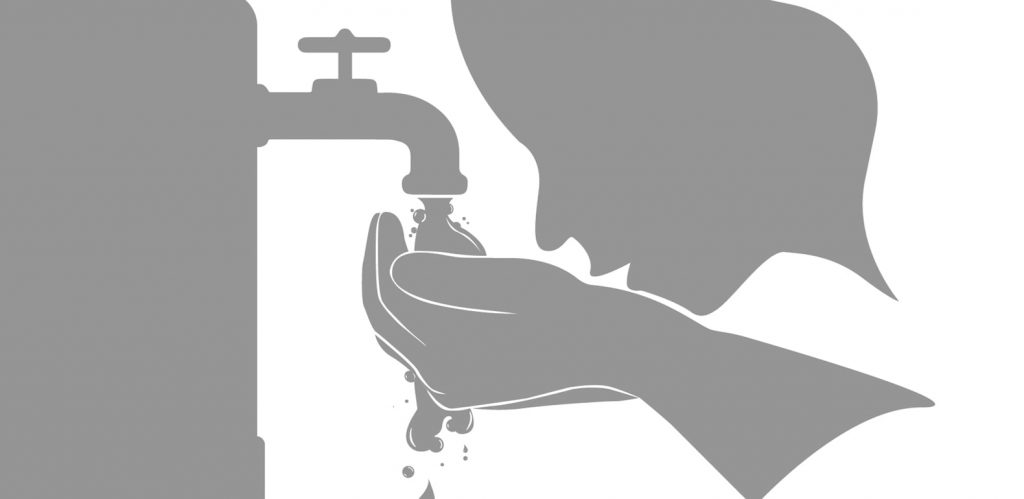
Wudu step by step consists of 10 actions: intention and bismillah, washing the hands, rinsing the mouth, cleaning the nose, then the four fard (obligatory) acts — washing the face, washing the arms to the elbows, wiping the head (masah), and washing the feet — followed by wiping the ears and the closing dua. The minimum valid wudu requires only the four fard acts; the full Sunnah wudu includes all 10.
Key Takeaways
- 4 fard acts from Quran 5:6: face → arms → head (masah) → feet — omitting any one invalidates wudu
- The full Sunnah sequence is 10 steps — following it earns additional reward beyond the minimum fard
- Each fard body part must be washed at least once; three times is the confirmed Sunnah
- Start with the right side for arms and feet — this is sunnah mu'akkadah, not fard
- The closing dua carries the promise of all eight gates of Jannah (Sahih Muslim 234)
- Bismillah before wudu is strongly recommended — some scholars hold it obligatory
- Water must reach every part of each fard area — a dry spot the size of a fingernail invalidates wudu
What are the steps of wudu?
The following sequence follows the Prophet Muhammad's ﷺ demonstrated method as recorded in Sahih al-Bukhari 164 — the narration of 'Uthman ibn 'Affan performing wudu in front of the Prophet ﷺ and receiving his confirmation. The four fard acts are clearly marked.
I bear witness that none has the right to be worshipped but Allah alone, without partner, and I bear witness that Muhammad is His slave and Messenger.Sahih Muslim 234 — the Prophet ﷺ said the eight gates of Jannah are opened for whoever recites this after wudu.
What are the 4 fard steps in wudu and why do they matter?
The four fard acts are established in Quran 5:6. They are non-negotiable — omitting any one of them, whether deliberately or by accident, invalidates the wudu and it must be repeated. Unlike the sunnah steps, there is no scholarly difference on this point across all four Sunni schools.
| # | Fard act | Area covered | Minimum wash |
|---|---|---|---|
| 1 | Wash the face | Hairline to chin, earlobe to earlobe | Once — no dry spot permitted |
| 2 | Wash both arms | Fingertips to and including the elbows | Once each arm |
| 3 | Wipe the head (masah) | Varies by school — min ¼ to full head | Once sweeping motion |
| 4 | Wash both feet | Toes to and including the ankles | Once each foot |
What common mistakes break wudu without people realising?
The most frequent errors found in wudu coaching and Islamic studies programmes:
- Dry elbow — the elbow itself must be washed, not just the arm up to it. Many people stop short of the elbow.
- Dry heels — the heel is frequently missed. Run water actively over the back of the heel and use the hand to ensure coverage.
- Between toes — water does not naturally flow between toes pressed together. Use the little finger to clean each gap.
- Thick rings blocking arm wash — rings must be loosened or removed if water cannot reach the skin beneath them.
- Wiping head three times — the masah is done once only. Doing it three times is against the Sunnah.
- Re-washing a body part before finishing — disturbing the sequence (for Shafi'i and Hanbali followers) or wasting water are common errors.
What is the dua for wudu?
The dua recited at the conclusion of wudu is narrated in Sahih Muslim 234, on the authority of 'Umar ibn al-Khattab. It is recited while facing the qibla after drying:
أَشْهَدُ أَنْ لَا إِلَٰهَ إِلَّا اللَّهُ وَحْدَهُ لَا شَرِيكَ لَهُ، وَأَشْهَدُ أَنَّ مُحَمَّدًا عَبْدُهُ وَرَسُولُهُ
Ashhadu an la ilaha illallahu wahdahu la sharika lah, wa ashhadu anna Muhammadan 'abduhu wa rasuluh.
I bear witness that none has the right to be worshipped but Allah alone, without partner, and I bear witness that Muhammad is His slave and Messenger. — Sahih Muslim 234
The Prophet ﷺ said: "Whoever among you performs wudu thoroughly, then says [this dua], the eight gates of Jannah will be opened for him and he may enter through whichever one he wishes."
Frequently asked questions about wudu steps
What are the steps of wudu?
How many steps is wudu?
What is the dua for wudu?
How do you start wudu?
Do you have to say Bismillah before wudu?
Can you talk during wudu?
Related reading: Order of wudu · What is wudu? · Wudu for women · Wudu in Islam · Water as Sadaqah Jariyah
Methodology: all steps and claims sourced to primary Islamic texts — Quran 5:6, Sahih al-Bukhari 164, Sahih Muslim 234, and the four Sunni schools' fiqh. No anonymous sources. YMYL religious guidance — last reviewed June 2026.