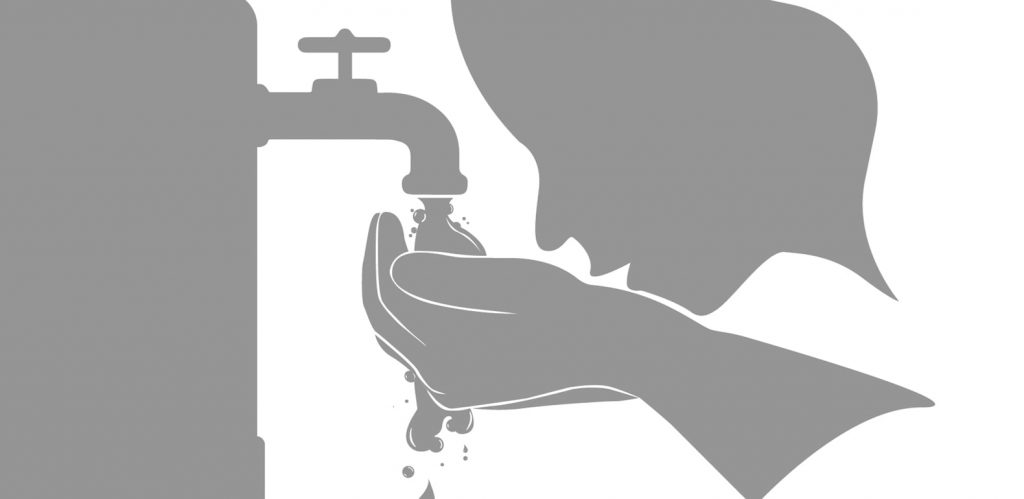
How to do wudu in the Sunni tradition: intention and bismillah, wash hands, rinse mouth, clean nose, then the four fard (obligatory) acts — wash the face, wash the arms to the elbows, wipe the head (masah), and wash the feet to the ankles — followed by wiping the ears and the closing dua. All four Sunni schools — Hanafi, Maliki, Shafi'i, and Hanbali — agree on these four fard acts. Their differences are in the details: whether niyyah is fard or sunnah, whether sequence is obligatory, and how much of the head must be wiped.
Key Takeaways
- All four Sunni schools agree on the same 4 fard acts — face, arms, masah, feet — from Quran 5:6
- Hanafi: niyyah is sunnah (not fard); sequence not obligatory; minimum head-wipe = one quarter
- Shafi'i: niyyah is fard; sequence (tartib) is obligatory; any portion of head suffices
- Maliki: niyyah is fard; continuity (muwalat) required; full head must be wiped
- Hanbali: niyyah is fard; sequence obligatory; full head required
- Sunnah acts (hands, mouth, nose, three washes each, right first, ears, closing dua) multiply reward but do not affect validity
- The Prophet ﷺ demonstrated wudu in Sahih al-Bukhari 164 — the primary textual model for all schools
How to do wudu — step by step
1
Niyyah (intention) and Bismillah Sunnah (Hanafi) / Fard (Shafi'i, Maliki, Hanbali)
Form the intention in your heart to perform wudu for the sake of Allah. Say Bismillah. In the Hanafi school this is strongly recommended (sunnah mu'akkadah) but not a condition of validity. In the Shafi'i, Maliki, and Hanbali schools it is fard — wudu without intention is invalid.
2
Wash both hands to the wrists Sunnah
Wash right hand three times then left, cleaning between the fingers. This preliminary wash is agreed sunnah across all schools. Remove any substance (nail polish, dough, paint) that blocks water from the skin before beginning.
3
Rinse mouth (madmadah) and clean nose (istinshaq) Sunnah mu'akkadah
Rinse the mouth three times; sniff water into both nostrils three times and expel. These are sunnah mu'akkadah across all four schools — strongly recommended. The Prophet ﷺ said: "Whoever performs wudu, let him put water in his nose." (Bukhari 162). Some Hanbali scholars consider istinshaq fard.
4
Wash the face FARD — all four schools
Wash the entire face — from hairline to chin, earlobe to earlobe — at least once. The sunnah is three times. No part of the face may be left dry. All four schools agree this is fard without exception.
5
Wash both arms to the elbows FARD — all four schools
Right arm from fingertips to and including the elbow, at least once (sunnah: three times), then left. The elbows must be included. All schools agree. No dry spot permitted.
6
Wipe the head — masah FARD — all four schools (minimum differs)
Wet both hands and make a single sweeping motion from front hairline to nape and back. Done once. Minimum amount by school: Hanafi — one quarter; Shafi'i — any portion; Maliki — entire head; Hanbali — entire head. The sunnah across all schools is to wipe the full head once. No school requires the masah to be done three times.
7
Wipe the ears Sunnah
Index fingers inside ears, thumbs wipe outside, once. Use the remaining water from the masah.
8
Wash both feet to the ankles FARD — all four schools
Right foot from toes to ankle (including ankle) at least once (sunnah: three times), then left. Clean between toes. No part may be dry. All four schools agree this is fard.
9
Closing dua Sunnah mu'akkadah
Ashhadu an la ilaha illallahu wahdahu la sharika lah, wa ashhadu anna Muhammadan 'abduhu wa rasuluh. — The eight gates of Jannah are opened for whoever recites this (Sahih Muslim 234).
How do the four Sunni schools differ on wudu?
| Issue |
Hanafi |
Maliki |
Shafi'i |
Hanbali |
| Niyyah |
Sunnah |
Fard |
Fard |
Fard |
| Sequence (tartib) |
Sunnah |
Not required (continuity is) |
Fard |
Fard |
| Continuity (muwalat) |
Sunnah |
Fard |
Sunnah |
Sunnah |
| Head masah minimum |
¼ of head |
Full head |
Any portion |
Full head |
| Bismillah |
Sunnah mu'akkadah |
Sunnah |
Sunnah |
Wajib (some say) |
| Bleeding breaks wudu? |
Major bleeding: yes |
No |
No |
Only from front/rear |
| Touching opposite sex |
With desire only |
With desire only |
Any direct contact |
With desire only |
What are the sunnah acts of wudu and why do they matter?
The sunnah acts do not affect the validity of wudu — omitting them produces a technically valid but minimum wudu. Performing them is how the Prophet ﷺ was narrated to have performed wudu in the authoritative hadith of 'Uthman ibn 'Affan (Bukhari 164). They multiply reward and represent the ihsan (excellence) dimension of worship.
Key sunnah acts: saying bismillah before starting; washing hands before other parts; rinsing mouth and nose; washing each part three times; starting with the right side; wiping the ears; reciting the closing dua; not wasting water; maintaining the Quranic sequence.
What invalidates wudu in the Sunni tradition?
All four schools agree on the core nullifiers:
- Passing wind, urine, stool, or madhi (pre-seminal fluid)
- Deep sleep (loss of conscious control)
- Losing consciousness (fainting, intoxication)
Schools differ on: bleeding (Maliki and Shafi'i: does not break wudu; Hanafi: major bleeding does), touching the opposite sex (Shafi'i: any contact; others: only with desire), and vomiting (Hanafi: a mouthful breaks wudu; Shafi'i and Maliki: does not).
Frequently asked questions about Sunni wudu
How do you do wudu in the Sunni tradition?
Niyyah + bismillah, wash hands, rinse mouth, clean nose, then the 4 fard acts: wash face, wash arms to elbows, wipe head (masah), wash feet to ankles, then ears and closing dua. All four Sunni schools agree on the same 4 fard acts.
Is there a difference between Hanafi and Shafi'i wudu?
Yes — in details. Hanafi: niyyah is sunnah; sequence not obligatory; head minimum ¼. Shafi'i: niyyah is fard; sequence (tartib) is obligatory; any portion of head suffices. The 4 fard acts themselves are identical in both schools.
What are the sunnah acts of wudu?
Bismillah, washing hands first, rinsing mouth (madmadah), cleaning nose (istinshaq), washing each area three times rather than once, starting with the right side, wiping ears, and reciting the closing dua.
What invalidates wudu in the Sunni tradition?
All schools agree: passing wind, urine, stool, or madhi; deep sleep; losing consciousness. Schools differ on: bleeding, touching the opposite sex, and vomiting. Know your school's position.
Which school is most followed in the UK?
The Hanafi school is followed by the majority of UK Muslims — particularly South Asian, Turkish, and many Arab communities. The Shafi'i school is common among East African, South East Asian, and Egyptian Muslim communities in the UK.
Does wudu expire after a set time?
No — wudu remains valid until a nullifier occurs. There is no time limit. A person can make wudu at Fajr and retain it all day if unbroken. Many scholars recommend maintaining wudu continuously as an act of worship.
Related reading: Wudu step by step · Order of wudu · What is wudu? · Wudu for women · Water as Sadaqah Jariyah
Methodology: sourced to Quran 5:6, Sahih al-Bukhari 164, Sahih Muslim, and four-school fiqh texts. No anonymous sources. YMYL religious guidance — last reviewed June 2026.
HNCO — Hajjah Naziha Charitable Organisation
UK non-profit organisation dedicated to Islamic education and humanitarian aid.
About HNCO →