
Live community appeal
Solar Pump #19 in progress
£633 raised of £1800
35% funded · £1167 to go
Jazak Allahu Khairan to our recent donors 🤲
Salman N., Rehan H., Lu, Sabina S., Mohammad F.
Thank you for your continued support — may Allah accept it.
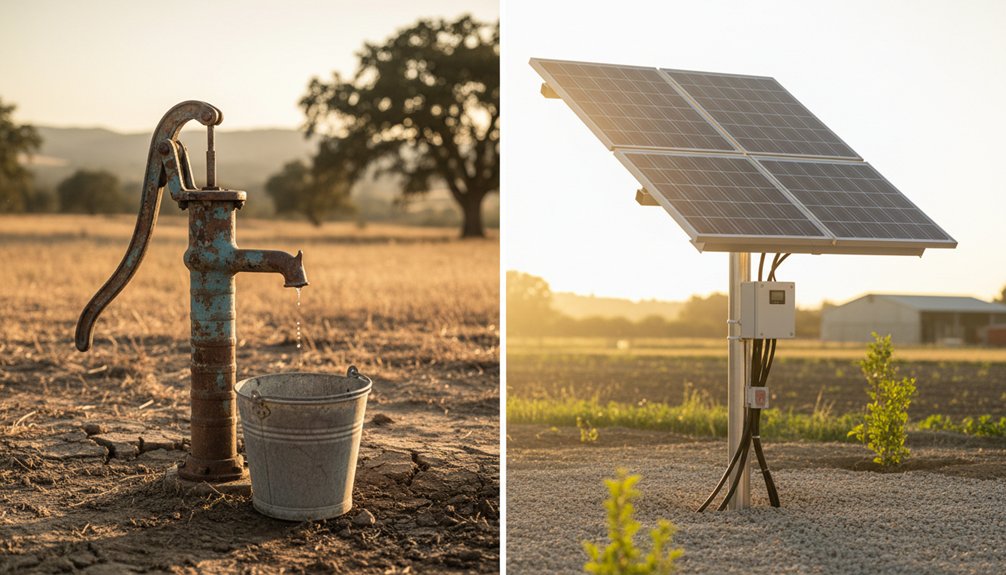
You should consider donating a hand pump if the community requires immediate access to water , serves 150-300 people daily, and has a limited budget of $1,500 to $3,000. Hand pumps provide instant water access, regardless of weather conditions. On the other hand, solar pumps are more suitable for larger populations of 500-2,000 people, agricultural purposes, and long-term projects where you can invest between $5,000 and $15,000 upfront. While solar pumps depend on sunlight, they deliver a higher volume of water and require less physical effort to operate. Your decision should be based on the size of the population, the urgency of the need for water, and how these elements fit with your project goals.
Which Communities Need Hand Pumps vs Solar Pumps?
When deciding between hand pumps and solar water pumps , it’s important to assess your community’s specific needs and resources.
Hand pumps are most effective in rural areas with limited access to electricity and smaller populations. They’re also suitable for emergency situations where rapid installation is necessary.
On the other hand, solar water pumps are better for agricultural communities that require a reliable water supply for irrigation and livestock, particularly in regions with ample sunlight and moderate water needs.
Urban areas may benefit from either option, depending on the available space and population density.
Hand pumps have lower initial costs but require manual operation, while solar pumps involve a higher upfront investment but offer automated water delivery .
Evaluate your community’s financial resources, technical skills, and ability to maintain the system over time when making your choice. Additionally, it’s crucial to consider the long-term maintenance requirements of each pump system to ensure sustainability and reliability.
How Many People Can Each Pump Serve Daily?
When choosing between hand pumps and solar pumps , it’s important to consider the daily capacity of each system.
Hand pumps generally provide 10-15 liters per minute when used manually, which restricts how much water can be obtained based on the time community members spend pumping.
In contrast, solar pumps can deliver 50-200 liters per minute, depending on their size and sunlight availability, enabling them to support a larger number of people during peak sunlight hours. Additionally, each pump serves 200-500 people daily , improving access to reliable water and enhancing community health.
Hand Pump Daily Capacity
A single hand pump typically serves between 150 to 300 people per day, depending on the pump’s design, water table depth, and community usage patterns. Understanding hand pump efficiency is essential for assessing whether it will meet your target community’s water needs.
Several factors influence daily water access :
- Pumping speed : Users can draw 10-20 liters per minute with consistent effort.
- Operating hours : Most communities use pumps during daylight for about 10-12 hours daily.
- Queue management : More households sharing one pump can lead to longer wait times.
- Physical limitations : Continuous pumping requires stamina, which can affect flow rates.
- Maintenance status : Well-maintained pumps deliver water more reliably.
When evaluating community needs, hand pumps are more effective for smaller villages. Larger populations may experience longer wait times and decreased per-person water access.
Solar Pump Output Rates
Solar pumps can provide water for larger populations compared to hand pumps, typically serving between 500 and 2,000 people daily , depending on system size and local conditions.
The efficiency of solar pumps relies on factors such as sunlight availability, well depth, and water demand patterns. A standard system with sufficient solar panels can pump between 5,000 to 20,000 liters daily, equating to approximately 10 to 40 liters per person in various community sizes.
Output may fluctuate due to seasonal changes in sunlight and weather conditions. Regular maintenance of solar panels is essential for optimal performance, as clean panels are more efficient.
Additionally, these pumps operate during peak sunlight hours , automatically adjusting their output based on the solar energy available, without the need for fuel or manual intervention.
Peak Usage Time Comparison
Understanding peak usage times is essential for evaluating the capacity of different pump types to serve a community throughout the day. Hand pumps offer a steady output, allowing users to access water during high-demand periods, such as early mornings and evenings.
In contrast, solar pumps rely on sunlight, which can limit their availability and may not match community needs at all times.
Here’s how peak demand influences daily capacity :
- Hand pumps can serve between 300 and 500 people due to their consistent availability.
- Solar pumps can serve between 200 and 400 people, constrained by sunlight conditions.
- Morning water collection (6-8 AM) is more favorable for hand pumps.
- Solar pumps operate at peak efficiency during midday hours.
- Evening usage (5-7 PM) presents challenges for solar-powered systems.
It’s important to analyze your community’s specific water usage patterns when choosing the most suitable pump technology.
How Long Do Hand Pumps and Solar Pumps Last?
When you invest in a water pumping system , longevity is an important factor alongside initial cost and performance. Hand pumps generally last between 15 to 20 years when properly maintained. Their lifespan can be influenced by factors such as material quality and installation depth.
Made from durable materials like stainless steel or cast iron, hand pumps are resistant to corrosion. Maintenance includes periodic seal replacements and occasional adjustments to the rod, which don’t require specialized skills.
On the other hand, solar pumps usually have a shorter lifespan of about 10 to 15 years, mainly due to the degradation of electronic components and solar panels over time. They require minimal maintenance as they don’t have moving parts that need regular lubrication.
While solar panels can last up to 25 years, controllers and motors may need to be replaced sooner. The maintenance needs of both systems differ, which can affect their overall durability .
Hand Pump vs Solar Pump: True Cost Per Person Served
Calculating the true cost per person served highlights the key differences between hand pumps and solar pumps. A thorough cost analysis should encompass not just the initial purchase prices , but also maintenance, repairs, and expected lifespan. These considerations are essential for selecting the right solution for community needs .
Here are the financial factors to consider:
- Hand pumps generally have initial costs between $1,500 and $3,000 but require regular maintenance.
- Solar pumps have higher upfront costs, ranging from $5,000 to $15,000, but incur minimal ongoing expenses.
- Hand pumps can serve 200 to 300 people effectively over a lifespan of 10 to 15 years.
- Solar systems can serve 500 to 1,000+ people for 20 to 25 years.
When calculating the total cost per person, solar pumps often offer a better value for larger communities .
How Quickly Can Each Pump Start Delivering Water?
When planning a water project, it’s important to know how quickly each pump type can start supplying water.
Hand pumps generally take one to three days for installation and can begin delivering water soon after setup is complete.
In contrast, solar pumps require a more complex installation involving electrical components and proper positioning, which typically takes three to seven days before they can consistently supply water.
Hand Pump Installation Speed
Installation speed is a key difference between hand pumps and solar water pumps, especially when immediate access to water is necessary.
Hand pumps can be installed quickly. Here are the main points:
- Installation takes only 1-3 days for completion.
- Requires minimal equipment - just basic drilling tools and manual labor.
- No electrical components to set up or test.
- Maintenance is straightforward, allowing for faster initial setup.
- Local technicians can usually carry out the installation without needing specialized training.
This quick installation process makes hand pumps suitable for situations where communities urgently require water.
You avoid long waits associated with complex systems. However, it’s still important to check the well depth and water table access before installation to ensure optimal performance.
Solar Pump Setup Timeline
Solar water pumps require a longer setup timeline compared to hand pumps, typically taking two to four weeks to become fully operational.
Key installation tasks include mounting solar panels at the appropriate angle, running electrical wiring, and positioning the pump controller.
If battery storage units are part of your system, you’ll also need to factor in shipping time for their arrival.
The efficiency of solar panels relies on their alignment with the sun, which requires careful calculation and implementation.
Additionally, there may be delays if local technicians need training on the specific equipment.
Weather conditions can also impact installation times, as work can’t proceed safely during storms or extreme heat.
Water Flow Start Times
Once installation is complete , the time it takes for water to flow varies significantly between the two pumping options. Hand pumps provide immediate water flow , while solar pumps depend on specific conditions to operate effectively.
Hand Pump Start Times:
- Water flows instantly when the handle is pumped.
- No waiting period or special conditions are required.
- Operates consistently regardless of the time of day or weather conditions.
- Provides immediate water access during emergencies.
Solar Pump Start Times:
- Requires sufficient sunlight to generate power for operation.
- May take several minutes to prime the system initially.
- Pump efficiency improves as sunlight intensity increases throughout the morning.
- Can’t supply immediate water during nighttime or overcast conditions.
Understanding these differences is important for selecting the right technology for your community’s specific needs and circumstances.
When Hand Pumps Outperform Solar Pumps (And Vice Versa)
Both hand pumps and solar pumps serve the same basic function, but specific conditions dictate which option is more suitable for your water access needs.
Hand pumps are advantageous in remote areas without sunlight or where maintenance skills are limited. They operate reliably during cloudy periods and don’t require technical expertise for repairs. They’re also a cost-effective solution when initial expenses need to remain low.
Solar pumps are beneficial for high-volume water delivery or in situations where there’s a shortage of labor in your community. They reduce physical effort and function efficiently in areas with ample sunlight. Their performance is superior when daily water demands exceed what can be achieved through manual pumping.
Your decision should be based on site-specific factors such as sunlight availability, required water volume, maintenance capabilities, and budget limitations .
Budget-to-Impact Guide: Choosing Your Water Pump Project
Before allocating funds to a water pump project, evaluate your financial resources against the benefits each system can deliver to your community.
Consider these factors when making your decision:
- Initial investment : Hand pumps cost between $1,000 and $3,000, while solar pumps range from $3,000 to $10,000.
- Daily water output : Solar systems can pump between 5,000 and 20,000 liters, compared to hand pumps, which can pump between 500 and 1,000 liters.
- Community engagement : Hand pumps require active participation, which helps build a sense of ownership through physical effort.
- Maintenance training : Solar systems require technical expertise for maintenance, while hand pumps need simpler mechanical skills.
- Long-term sustainability : Calculate total costs, including repairs, replacements, and energy sources, over a ten-year period.
Your budget influences not only the equipment choice but also community involvement, technical capacity, and water accessibility for the future.