
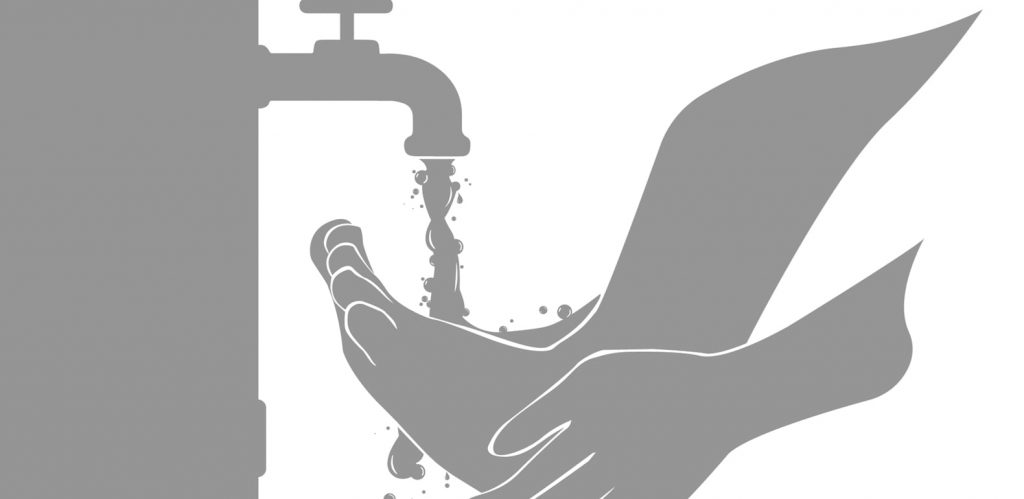
The correct order of wudu follows ten steps: intention (niyyah), hands, mouth, nose, face, arms to elbows, wiping the head, ears, feet, then the closing dua. Of these, four are fard (obligatory) — face, arms, head, and feet — and must be completed for wudu to be valid. Whether the sequence itself is obligatory depends on your school of thought.
Key Takeaways
- 4 fard (obligatory) acts in Quranic order: face → arms → head (masah) → feet — per Quran 5:6
- Shafi'i and Hanbali schools: sequence (tartib) is obligatory — wrong order = invalid wudu
- Hanafi school: sequence is sunnah, not fard — wudu remains valid if reversed
- Starting with the right side (arms, feet) is a confirmed sunnah, not fard
- Rinsing mouth and nose are sunnah mu'akkadah — strongly recommended, not obligatory
- The closing dua carries the promise of all eight gates of Jannah (Sahih Muslim)
- Each fard body part must be washed at least once; three times is the Sunnah
What is the full sequence of wudu?
Below is the complete sequence as practised according to the Sunnah of the Prophet Muhammad ﷺ. The four fard (obligatory) steps are marked — these cannot be omitted. All other steps are either sunnah mu'akkadah (strongly recommended) or mustahab (preferred).
I bear witness that there is no god but Allah alone, without partner, and I bear witness that Muhammad is His servant and Messenger.
Sahih Muslim 234 — narrated: "the eight gates of Jannah are opened for whoever recites this after wudu."
Does the order of wudu matter — what do the schools say?
This is one of the most practically important questions in wudu fiqh, and the schools genuinely differ:
| School | Is sequence (tartib) obligatory? | What happens if you wash out of order? |
|---|---|---|
| Hanafi | No — it is sunnah, not fard | Wudu is valid; reward is reduced for missing the sunnah |
| Maliki | No — but continuity (muwalat) is required | Valid if continuous; invalid if long pause between acts |
| Shafi'i | Yes — tartib is fard | Wudu must be repeated in the correct sequence |
| Hanbali | Yes — tartib is fard | Wudu must be repeated in the correct sequence |
For most UK Muslims following the Hanafi school, washing the feet before the arms by accident does not require you to restart — your wudu is valid. If you follow the Shafi'i or Hanbali school, it does.
Why does the Quranic verse list head-wiping between arms and feet?
Quran 5:6 lists the four fard acts in the order: face → arms → head → feet. Classical scholars of tafsir note that this order is not arbitrary. The waw (و — "and") conjunction in Arabic does not inherently imply sequence, but the Shafi'i school, following Imam al-Shafi'i's reasoning, argues that the Prophet's ﷺ consistent demonstration of this order in authenticated hadith makes it binding.
Imam al-Nawawi's commentary in Al-Majmu' notes that 'Uthman ibn 'Affan performed wudu in front of the Prophet ﷺ and followed this exact sequence — and the Prophet ﷺ confirmed it as correct performance. This narration in Sahih al-Bukhari 164 is the primary evidence for Shafi'i sequence obligation.
What is the correct way to do masah (wiping the head)?
The head masah is one of the most frequently misunderstood steps because it is wiped, not washed, and done only once:
- Wet both hands with fresh water (not leftover water from the arm wash)
- Place both hands at the front hairline
- Sweep backwards to the nape of the neck
- Return hands to the front — this counts as one masah
For women: no need to undo braids, buns, or tied hair. Wipe over the surface from front to nape — wudu is valid regardless of hair length or style, provided the motion reaches the scalp surface. See the full wudu guide for women for specific rulings on hijab masah.
Can you wipe over socks instead of washing feet?
Yes — wiping over khuffain (leather socks) or thick waterproof socks in place of washing the feet is a confirmed concession (rukhsa) in Islam. The conditions are: the socks must have been put on while in a state of wudu, and the concession lasts 24 hours for residents and 72 hours for travellers from the first time wudu was broken after putting them on.
A fatwa from Seekers Path (Darul Iftaa UK) and mainstream UK Islamic scholars confirm that modern thick socks that are waterproof meet the condition for the majority Hanafi and Maliki positions.
Frequently asked questions about the order of wudu
What is the correct order of wudu?
Does the order of wudu matter?
What are the 4 fard acts of wudu in order?
What happens if you do wudu in the wrong order?
Do you have to wash the right side before the left?
Is the closing dua part of wudu?
Related reading: What is wudu? · Wudu step by step · Wudu for women · Wudu in Islam · Sadaqah Jariyah · Donate a water pump
Methodology: drawn from primary Islamic sources — Quran 5:6, Sahih al-Bukhari, Sahih Muslim, and scholarly fiqh texts across the four Sunni schools. No anonymous sources. Last reviewed June 2026.