
Muharram 2026: Dates, Significance & How to Observe the Sacred Month
By HNCO — Hajjah Naziha Charitable Organisation · Last updated: May 2026
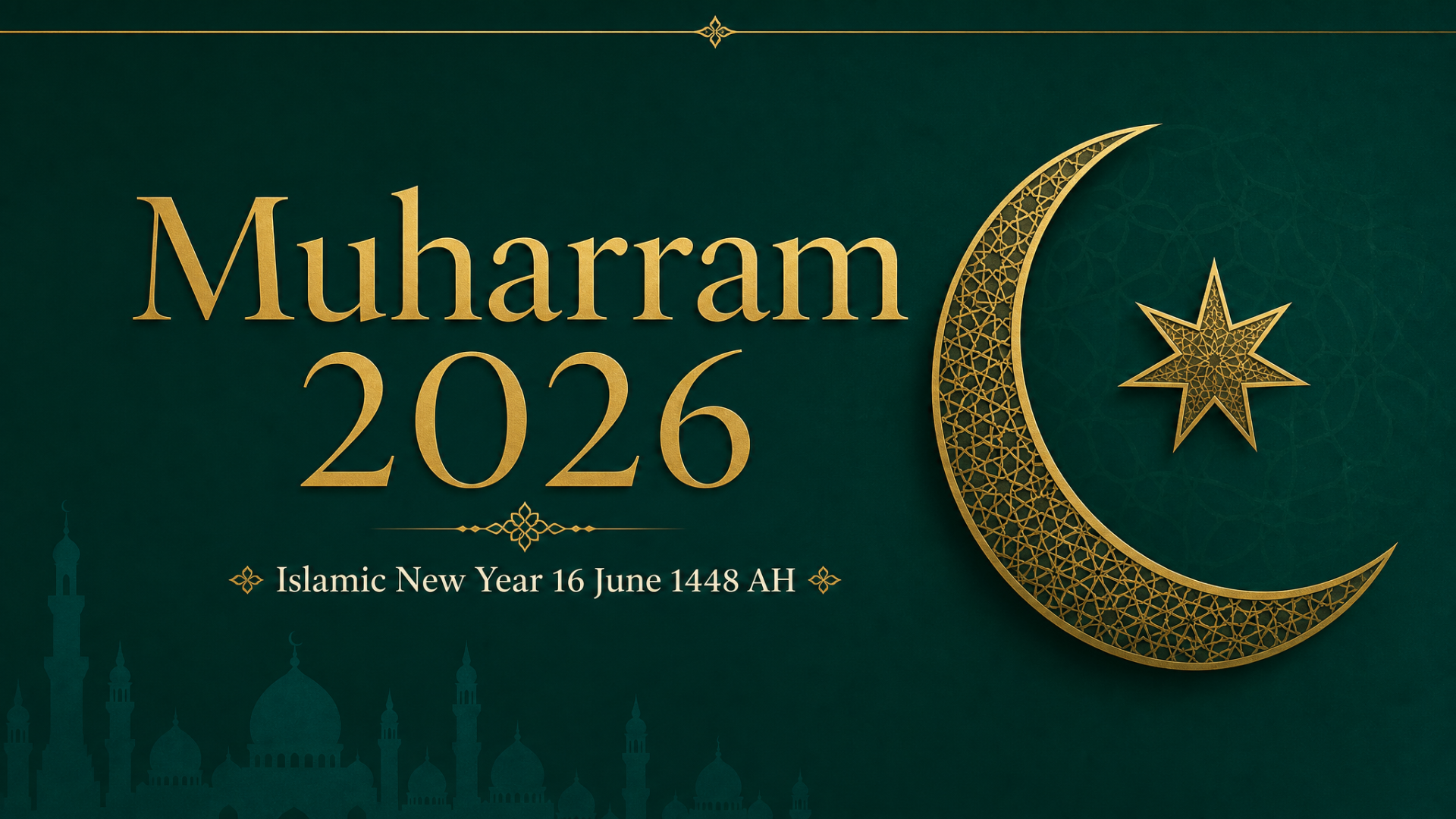
Muharram 2026 — the first month of the Islamic lunar calendar and one of Islam's four sacred months — begins on 16 June 2026, marking the Islamic New Year 1448 AH, with the Day of Ashura falling on 25 June 2026.
Key Takeaways
- Muharram 2026 start date: 16 June 2026 (1 Muharram 1448 AH), subject to moon sighting.
- Day of Ashura 2026: 25 June 2026 (10 Muharram 1448 AH).
- The Prophet ﷺ called Muharram "the Month of Allah" — the highest title given to any month besides Ramadan. (Sahih Muslim 1130c)
- Fasting on Ashura expiates the minor sins of the preceding year. Fasting on both the 9th and 10th (24–25 June) is the recommended sunnah.
- Muharram is one of the four sacred months (Ashur al-Hurum) in which good deeds are multiplied and conflict is forbidden.
- The Battle of Karbala (10 Muharram 61 AH / 680 CE) — the martyrdom of Imam Husayn ibn Ali, grandson of the Prophet ﷺ — occurred on Ashura, giving the day deep historical weight across the Muslim world.
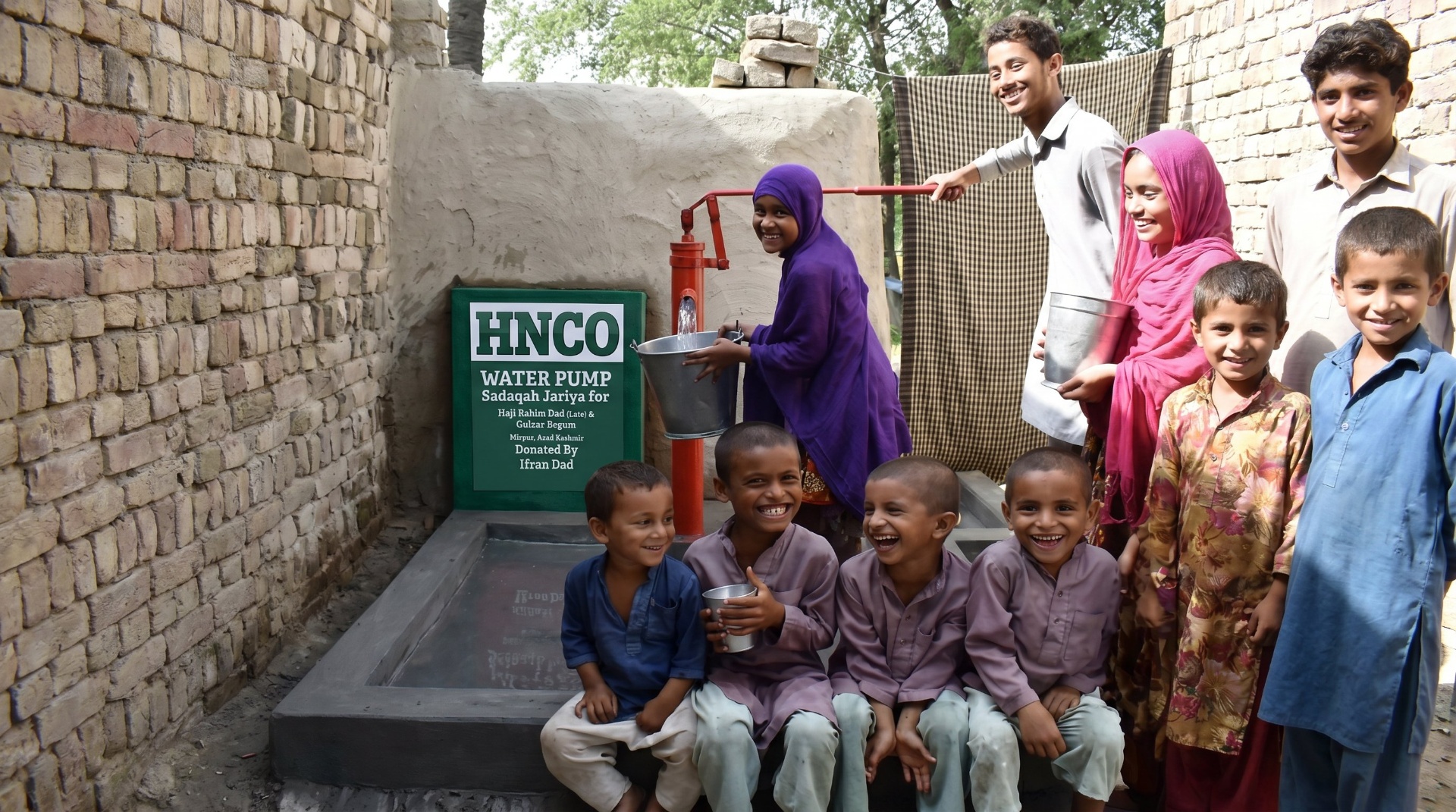
- Sadaqah jariyah given in Muharram — such as a water pump donation — carries the multiplied reward of a sacred month, with blessings continuing long after the act.
What is Muharram?
Muharram is the first month of the Islamic Hijri calendar and one of the four sacred months that Allah (subhanahu wa ta'ala) has honoured above all others. The word "Muharram" (مُحَرَّم) comes from the Arabic root meaning "forbidden" or "made sacred" — signalling that sin weighs more heavily and good deeds carry greater reward during this period.
What sets Muharram apart from the other three sacred months is a distinction the Prophet Muhammad ﷺ bestowed upon it directly. In a hadith recorded in Sahih Muslim, he said: "The best of fasts after the month of Ramadan is the Month of Allah which you call Muharram." Attributing the month directly to Allah (the "Month of Allah") is an honour given to no other month by name, and scholars across centuries have cited this hadith to underscore Muharram's unique spiritual weight.
"The best of fasts after the month of Ramadan is the Month of Allah which you call Muharram."
— Prophet Muhammad ﷺ, Sahih Muslim 1130c
When is Muharram 2026?
Muharram 2026 begins on Tuesday, 16 June 2026, corresponding to 1 Muharram 1448 AH, subject to the confirmed sighting of the crescent moon (hilal). Islamic months begin at sunset on the evening of moon sighting, so the new month may technically be declared on the evening of 15 June in some regions.
Muharram 2026 begins on 16 June 2026 (1 Muharram 1448 AH) and ends on approximately 14 July 2026 (29/30 Muharram 1448 AH), subject to moon sighting.
The Islamic lunar calendar is approximately 11 days shorter than the Gregorian solar calendar, which is why Muharram shifts earlier each year in the Gregorian calendar. In 2026 the Islamic calendar spans two Hijri years: 1447 AH and 1448 AH.
9 Muharram (Tasu'a) — 24 June 2026
Recommended fast day
10 Muharram (Ashura) — 25 June 2026
Primary fast and observance
2 Muharram 1448 AH falls on 17 June 2026. In the Shia tradition, this marks the day Imam Husayn ibn Ali arrived at Karbala, beginning the ten-day vigil that ended on Ashura.
| Date (Gregorian) | Hijri Date | Significance |
|---|---|---|
| 16 June 2026 | 1 Muharram 1448 AH | Islamic New Year begins |
| 24 June 2026 | 9 Muharram 1448 AH | Tasua — recommended fast day (Yawm al-Tasu'a) |
| 25 June 2026 | 10 Muharram 1448 AH | Day of Ashura — primary fast and observance |
| 26 June 2026 | 11 Muharram 1448 AH | Alternative second fast day |
| ~15 July 2026 | 30 Muharram 1448 AH | End of Muharram (approx.) |
All dates are based on astronomical calculation and are subject to 1–2 day variance depending on regional moon sighting decisions. Always confirm with your local Islamic authority or mosque.
Why is Muharram called the Month of Allah?
Islamic scholars explain that when Allah or His Prophet ﷺ ascribe something to themselves by name ("Month of Allah", "House of Allah"), it signals a special, exclusive honour. Among the twelve months of the Hijri calendar, only Muharram carries this direct divine attribution in an authentic hadith — a fact that Ibn Rajab al-Hanbali and other classical scholars used to argue Muharram holds a rank above the other three sacred months in terms of voluntary worship.
The four sacred months are: Dhul Qadah, Dhul Hijjah, Muharram, and Rajab — collectively called Ashur al-Hurum (أشهر الحرم). The Quran mentions them in Surah At-Tawbah (9:36): "Indeed, the number of months with Allah is twelve [lunar] months in the register of Allah [from] the day He created the heavens and the earth; of these, four are sacred."
During these months, good deeds earn amplified reward and sins carry greater consequence — making Muharram 2026 an ideal window for increased prayer, fasting, sadaqah, and remembrance of Allah.
What is the Day of Ashura 2026?
Ashura (عاشوراء) falls on the 10th of Muharram — in 2026, that is Thursday, 25 June 2026. The word "Ashura" derives from the Arabic for "ten" (عشرة). It is simultaneously one of the most spiritually rewarding and historically significant days in the Islamic year.
The Mosaic connection — why the Prophet ﷺ fasted on Ashura
When the Prophet ﷺ arrived in Madinah and found the Jews fasting on the 10th of Muharram, he asked the reason. They explained that Allah saved Prophet Musa (Moses) and Bani Israel from Pharaoh on this day, and Musa fasted in gratitude. The Prophet ﷺ replied: "We are more deserving of Musa than you," and began observing the fast himself, instructing his companions to do likewise. This hadith is recorded in both Sahih Bukhari and Sahih Muslim.
The martyrdom of Imam Husayn at Karbala
On 10 Muharram 61 AH (10 October 680 CE), Imam Husayn ibn Ali — grandson of the Prophet ﷺ and son of Ali ibn Abi Talib — was killed at the Battle of Karbala alongside most of his family and companions, after refusing to pledge allegiance to the Umayyad caliph Yazid I. This event profoundly shaped Islamic history, theology, and spiritual identity across the Muslim world. Shia Muslims observe Ashura as a day of mourning and commemoration, while Sunni Muslims primarily observe it through fasting, holding Imam Husayn in the highest regard as a martyr and defender of justice.
The Mourning of Muharram — the ten-day period of lamentation observed by Shia Muslims leading up to Ashura — includes processions, elegies (marsiya), and in some communities, public gatherings commemorating the martyrdom of Imam Husayn.
How should Muslims observe Muharram 2026?
Muharram 2026 offers a structured set of recommended practices drawn directly from authentic hadith, making it easy for Muslims to engage meaningfully with the month.
Fasting on Ashura and the day before
Fasting on the Day of Ashura is Sunnah Mu'akkadah — a strongly confirmed sunnah. According to Sahih Muslim 1162b, the Prophet ﷺ said that fasting on Ashura expiates the minor sins of the previous year. To distinguish Muslim practice from Jewish observance, the Prophet ﷺ intended to also fast on the 9th of Muharram (the day before), and recommended this to his companions — making the best approach fasting on both 24 and 25 June 2026.
Increasing voluntary prayers and remembrance
Muharram is a time to increase nafl (voluntary) prayers, recitation of Quran, and dhikr (remembrance of Allah). Classical scholars describe the sacred months as "seasons of worship" — just as the Hajj season is a sacred time for pilgrimage, Muharram is a sacred time for inward renewal.
Giving generously — sadaqah in the sacred months
The multiplied reward of deeds in Muharram applies equally to charitable giving. Sadaqah given during Muharram carries greater reward than at other times of the year. Sadaqah jariyah — ongoing charity whose benefits continue after the donor's death — is especially powerful during these blessed days. Donating a water pump or water well in Muharram is a practice with roots in the Islamic tradition of maximising good deeds in sacred seasons.
Muharram 2026 — Key Numbers
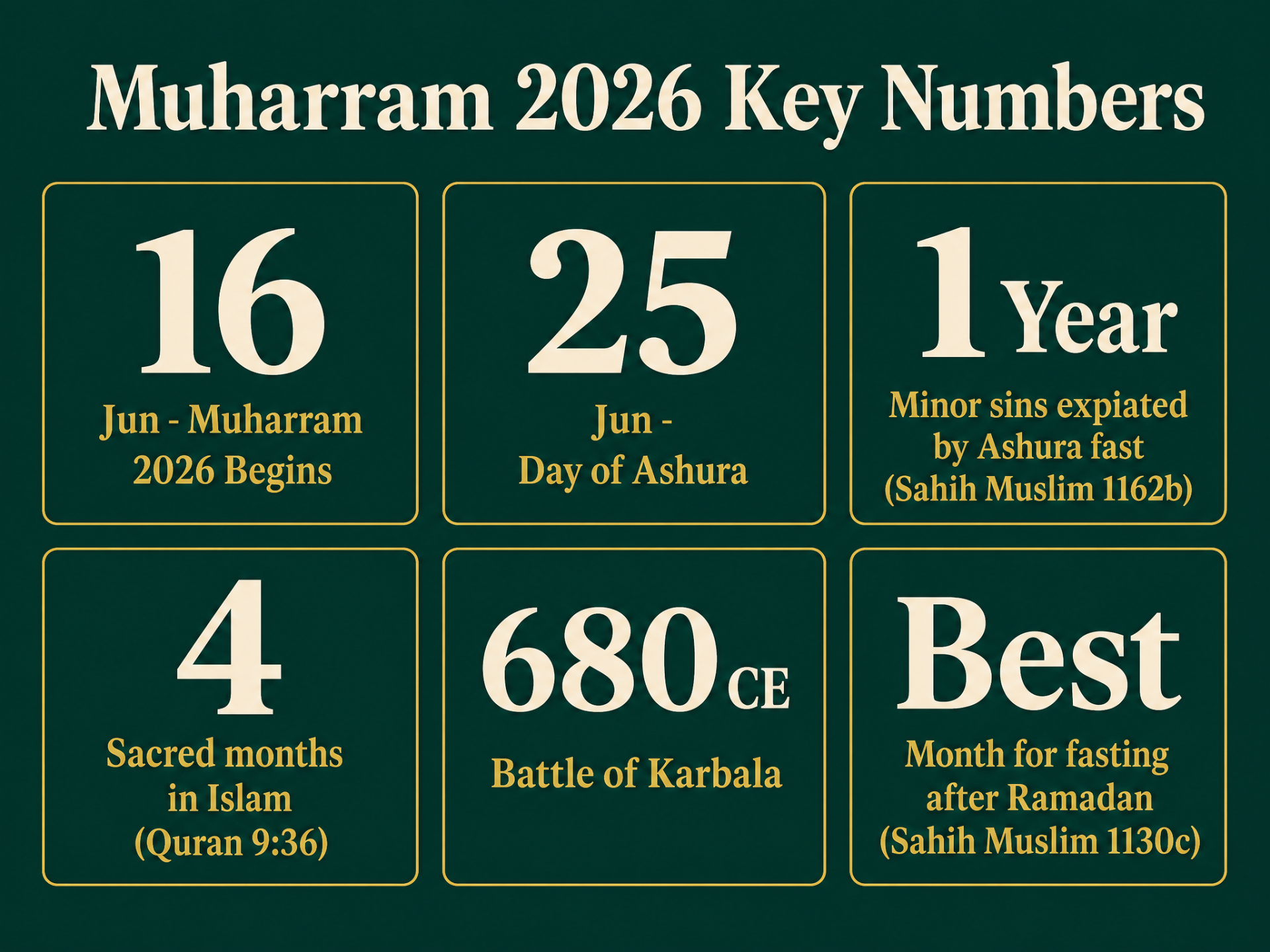
16 Jun
Muharram 2026 begins
1 Muharram 1448 AH
25 Jun
Day of Ashura 2026
10 Muharram 1448 AH
1 year
Minor sins expiated by Ashura fast
Sahih Muslim 1162b
4
Sacred months in Islam
Quran 9:36
680 CE
Battle of Karbala — Ashura
10 Muharram 61 AH
Best
Month for fasting after Ramadan
Sahih Muslim 1130c
How does Muharram 2026 compare to the other sacred months?
All four sacred months share the same core features: multiplied reward for good deeds, prohibition on warfare and conflict, and increased spiritual significance. What differentiates them is their specific associations and recommended practices.
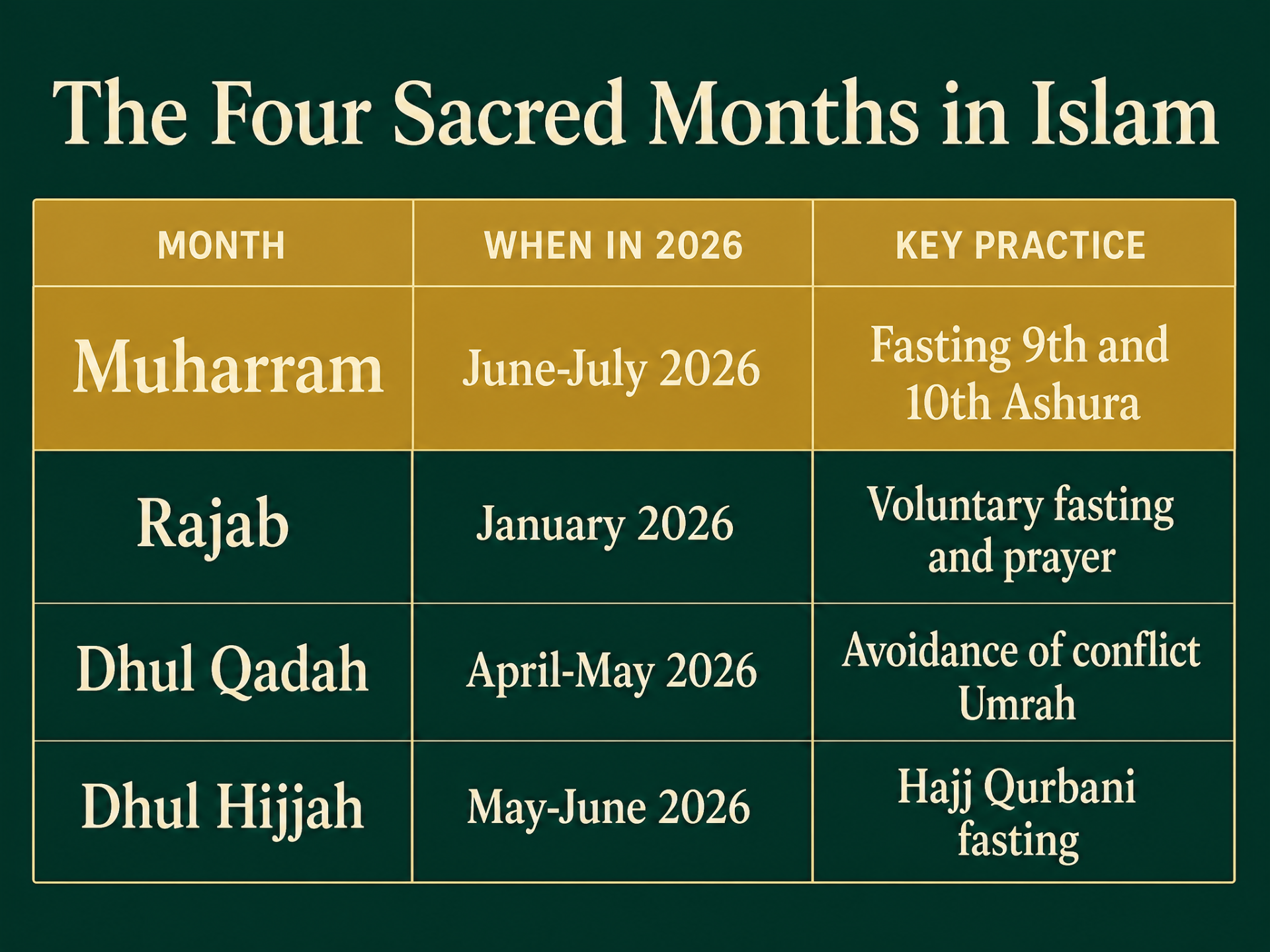
| Sacred Month | When in 2026 | Primary Association | Key Practice |
|---|---|---|---|
| Muharram | June–July 2026 | Islamic New Year; Ashura | Fasting (9th & 10th); sadaqah; dhikr |
| Rajab | Jan 2026 (1447 AH) | Month before Sha'ban; Isra wal Mi'raj | Voluntary fasting; prayer |
| Dhul Qadah | April–May 2026 | Month before Hajj season | Avoidance of conflict; Umrah |
| Dhul Hijjah | May–June 2026 | Hajj pilgrimage; Eid al-Adha; Qurbani | Hajj; Qurbani; fasting first 9 days |
Among the four, Islamic scholarship places Muharram in a distinct category because the Prophet ﷺ explicitly named it the "Month of Allah" and the "best month for fasting after Ramadan" — making it the one sacred month with a direct prophetic mandate for extended voluntary worship, beyond the acts tied to specific rites like Hajj.
What does Muharram mean for charity and giving?
In Islamic theology, the reward for voluntary deeds in sacred months is amplified — just as the reward for obligatory deeds is greater than at other times. This makes Muharram 2026 one of the optimal windows of the year for charitable giving, particularly sadaqah jariyah donations (ongoing charity), whose rewards continue flowing to the donor even after death.
Muharram 2026 donations made during the sacred month carry the multiplied reward of the Ashur al-Hurum — making this one of the best windows of the year to give Sadaqah Jariyah.
Water is one of the most profound forms of sadaqah jariyah in the Islamic tradition. The Prophet ﷺ was asked which sadaqah is best, and water was among the acts mentioned. A water pump or well used by a community delivers ongoing benefits — clean drinking water — with every use constituting a reward for the donor. HNCO's water well programme channels Muharram donations directly into solar-powered water pumps for communities in Pakistan, ensuring the blessings of this sacred month continue long after it passes.
Zakat, while obligatory and not restricted to sacred months, can also be calculated and paid during Muharram for those whose nisab anniversary falls in this period. HNCO distributes zakat funds to the eight categories of eligible recipients specified in the Quran.
Other acts of giving recommended in Muharram
Beyond water, classical scholars recommend feeding the poor and orphans during Muharram as a way of honouring the spirit of Ashura. Supporting orphans is among the most beloved acts to Allah at any time of year — but doing so during a sacred month multiplies that reward further. The Prophet ﷺ said that he and the one who supports an orphan will be in Paradise like two fingers placed together.
Give Sadaqah Jariyah This Muharram 2026
A water pump donation through HNCO provides clean water to a community in Pakistan — giving in the sacred month of Allah, with rewards that continue beyond your lifetime.
Donate a Water Pump This Muharram →What are common misconceptions about Muharram?
A number of misunderstandings circulate about Muharram — some harmless, others that can lead to incorrect practice.
Misconception 1: Muharram is primarily a Shia observance. In fact, Muharram's status as a sacred month and the recommendation to fast on Ashura are grounded in hadith accepted across all major schools of Islamic jurisprudence. Both Sunni and Shia Muslims observe Ashura, albeit in different ways — the fasting tradition is primarily Sunni practice drawing on the Mosaic connection, while the mourning traditions are primarily Shia practice drawing on the Karbala connection.
Misconception 2: The Islamic New Year is celebrated like secular new year events. The Islamic New Year (Ras al-Sana al-Hijriyya) is a time of reflection, not celebration in the conventional sense. There are no obligatory acts tied to 1 Muharram itself beyond increased awareness and intention to improve one's worship in the coming year.
Misconception 3: Only the 10th of Muharram matters. While Ashura is the highlight, the entire month carries the status of a sacred month. Every good deed performed throughout Muharram — prayer, fasting, charity, sadaqah, recitation of Quran — carries amplified spiritual reward.
Misconception 4: Fasting on Ashura alone is sufficient. Scholars of all four Sunni madhabs recommend fasting on the 9th and 10th together (24–25 June 2026) to follow the Prophet's stated intention and to distinguish Muslim practice from that of other religious communities. Fasting only on the 10th is valid but missing the fuller sunnah.
How does the Islamic calendar determine the Muharram 2026 date?
The Islamic calendar is a purely lunar calendar of 12 months totalling 354 or 355 days — approximately 11 days shorter than the Gregorian solar year. Each month begins with the confirmed sighting of the new crescent moon, which is why Islamic dates shift roughly 11 days earlier in the Gregorian calendar each year. The sighting of the moon may be confirmed by direct observation or, in some countries and organisations, by astronomical calculation.
This means Muharram 2026 falls in June, while Muharram 2027 will fall in approximately early June, and Muharram 2028 in late May — completing a slow backward cycle through the Gregorian year over roughly 33 years. The date of Muharram 2026 (16 June) has been calculated based on astronomical new moon data; confirmation depends on the moon being visible to the naked eye at sunset on 15 June 2026 in relevant locations.
For accurate prayer timetables and local moon sighting news in the UK, consult your regional mosque or Islamic authority.
Frequently asked questions about Muharram 2026
What date is Muharram 2026?
What is the date of 9 and 10 Muharram 2026?
When does Muharram 2026 end?
How do Shia Muslims observe Muharram?
When does Muharram 2026 start?
When is Ashura 2026?
Is fasting on Ashura obligatory?
What does fasting on Ashura expiate?
Why is Muharram called the Month of Allah?
What is the significance of the Battle of Karbala on Ashura?
Is it good to give sadaqah in Muharram?
What are the four sacred months in Islam?
HNCO — Hajjah Naziha Charitable Organisation
Hajjah Naziha Adil Kabbani is a descendant of Prophet Muhammad (peace be upon him), through both her maternal and paternal lineages. HNCO is a UK-based Islamic non-profit organisation delivering water, food, education, and emergency relief projects in Pakistan and beyond. Learn about HNCO's work →